
Your invoice was due three days ago. The client has not paid. They have not replied to your last email. You are starting to worry.
This is the part of freelancing nobody warns you about.
Chasing late invoices is awkward. You do not want to seem pushy. You do not want to damage the relationship. But you also need to get paid.
Here is the good news: you have more power than you think. UK law is on your side. And most late payments are not malicious — they are disorganised finance teams, forgotten emails, or cashflow delays.
The trick is knowing what to say, when to say it, and how to escalate without burning bridges.
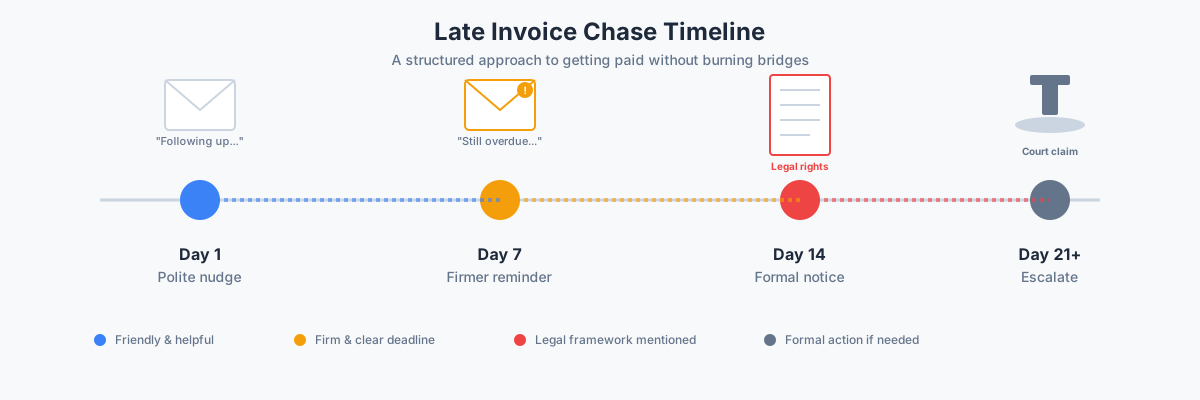
This guide is a day-by-day system. Use it the next time an invoice goes overdue.
Why invoices go unpaid
Before we talk about chasing, let's talk about why payments go missing in the first place.
Sometimes it is genuine cashflow trouble. The client is struggling. They want to pay but cannot yet.
More often, it is process friction. Your invoice landed in the wrong inbox. The approver is on holiday. Finance needs a purchase order you never sent. The email got buried.
Occasionally, it is avoidance. The client is unhappy with the work, or they are testing whether you will chase. Bad actors exist. They are rare but real.
Your job is to figure out which one you are dealing with. That changes how you chase.
The first email sorts the genuine delays from the red flags.
Day 1 after the due date — the polite nudge
Do not wait a week. Chase the day after the invoice was due.
Most freelancers hesitate here. They think "maybe the payment is processing" or "I don't want to seem desperate."
Wrong mindset. Prompt follow-up sets a standard. It tells the client you track your invoices and you expect them paid on time.
This first email should be short, calm, and helpful. Give them an easy out in case it is a genuine mistake.
Email template — Day 1
Subject: Invoice INV-2026-042 — payment due 26 August
Hi [Name],
Just following up on invoice INV-2026-042 for £1,400, which was due on 26 August.
I have not seen the payment come through yet. If it is already on the way, please ignore this email. If accounts needs anything else from me (a different format, a PO number, or a resend), let me know and I will sort it today.
Thanks,
[Your Name]
What this email does
It restates the invoice number, amount, and due date. That removes ambiguity.
It gives them a graceful exit if the payment is already sent.
It offers to help if something is blocking payment on their end.
It stays polite without apologising. You are not sorry for chasing money you are owed.
Most clients reply within 24 hours. If they do, great. Problem solved.
If they do not reply, wait until day 7.
Day 7 — the firmer reminder
A week has passed. Still no payment. Still no reply.
Now you tighten the tone. Stay professional, but make it clear this is overdue and you need a response.
Email template — Day 7
Subject: Second reminder — Invoice INV-2026-042 overdue
Hi [Name],
I am following up again on invoice INV-2026-042 for £1,400, which was due on 26 August and is now 7 days overdue.
I have not received payment or a reply to my last email. Can you confirm when I can expect this to be settled? If there is an issue with the invoice or the work, please let me know so we can resolve it.
I would appreciate a response by 5 September so I can plan accordingly.
Thanks,
[Your Name]
What changed
You are no longer offering to resend things or asking if they need help. You are asking for a payment date.
You have set a deadline for their reply. That creates urgency without threatening anything.
You have acknowledged the possibility of a dispute. If they are unhappy with the work, this gives them a chance to say so. Silence at this stage is a red flag.
If they reply with a date, hold them to it. If they miss the date, escalate immediately.
If they do not reply at all, move to day 14.
Day 14 — the formal notice
Two weeks overdue. No payment. No communication. This is now a problem.
At this stage, you need to signal that you are serious. Mention the legal framework. Mention the next steps. Stay calm but firm.
Email template — Day 14
Subject: Final reminder — Invoice INV-2026-042 now 14 days overdue
Hi [Name],
Invoice INV-2026-042 for £1,400 was due on 26 August and is now 14 days overdue.
Despite two previous reminders, I have not received payment or a response.
Under the Late Payment of Commercial Debts (Interest) Act 1998, I am entitled to charge statutory interest on overdue invoices and recover debt collection costs. I would prefer not to escalate this, but I will if the invoice remains unpaid.
Please arrange payment by 12 September. If there is a reason for the delay, let me know today so we can discuss it.
Thanks,
[Your Name]
What this does
You have named the law. That shows you know your rights.
You have mentioned consequences (interest and recovery costs) without making direct threats.
You have given one final deadline.
This email usually gets a response. Either they pay, or they explain why they cannot. If they ignore this one too, you move to formal action.
UK late payment law — what you can actually claim
UK freelancers have statutory rights when commercial invoices go unpaid. You do not need to write these terms into your contract. The law gives them to you automatically.
Payment deadlines
If you invoice a business, they must pay within 60 days unless your contract says otherwise. Many freelancers set shorter terms (Net 7, Net 14) and that overrides the 60-day default.
If you invoice the public sector (councils, NHS, government departments), the deadline is 30 days.
Once the payment is overdue, you can claim interest and recovery costs.
Statutory interest
You can charge interest at the Bank of England base rate plus 8%. As of August 2026, the base rate is 4.75%, so your statutory interest rate is 12.75% per year.
That works out to roughly 1% per month on the overdue amount.
For a £1,400 invoice that is 30 days late, you can claim about £14 in interest. Not huge, but it adds up. The real power is that mentioning it often speeds up payment.
Debt recovery costs
You can also claim a fixed fee for the cost of chasing the debt. The amount depends on the invoice size:
- £40 for debts up to £999.99
- £70 for debts between £1,000 and £9,999.99
- £100 for debts over £10,000
So on that £1,400 invoice, you could claim £70 in recovery costs on top of the original amount and interest.
How to calculate and claim it
When you send a formal letter or small claims notice, include the breakdown:
- Original invoice amount: £1,400
- Statutory interest (30 days at 12.75% p.a.): £14.40
- Debt recovery costs: £70.00
- Total due: £1,484.40
Most clients settle when they see those numbers. Nobody wants a small claims court filing over a few hundred pounds.
Source and disclaimer
These rules come from the Late Payment of Commercial Debts (Interest) Act 1998. You can read the full guidance on GOV.UK Late Commercial Payments.
This guide is not legal advice. If the debt is large or complicated, speak to a solicitor or use a debt recovery service.
When to escalate beyond email
If you have sent three reminders over 14 days and the client is still ignoring you, it is time to escalate.
Letter before action
This is a formal written notice. You can send it by email, but post (recorded delivery) carries more weight.
State the facts. Restate the invoice. Demand payment within 7 days. Mention that you will file a claim in the county court if they do not settle.
Many solicitors offer a one-off letter service for £50–£100. Sometimes just seeing a law firm's letterhead is enough to unlock payment.
Small claims court
For debts under £10,000, you can file a claim online through Money Claim Online. The fee is around £35–£100 depending on the amount.
You do not need a solicitor for small claims. The process is designed for non-lawyers. You submit your evidence (invoice, contract, emails), the court reviews it, and if the client does not defend, you win by default.
Winning a claim does not guarantee payment, but it gives you legal power to enforce collection (bailiffs, charging orders, etc.).
When not to bother
If the client is a limited company and they have gone bust, you are unlikely to recover much. Check Companies House to see if they are still trading.
If the debt is under £200 and the client is clearly avoiding you, it might not be worth the time. Write it off. Learn the lesson. Tighten your contract and payment terms for next time.
Copy-paste email sequence — full summary
Here is the full three-email sequence you can adapt and reuse.
Day 1 — Polite nudge
Subject: Invoice INV-2026-042 — payment due 26 August
Hi [Name],
Just following up on invoice INV-2026-042 for £1,400, which was due on 26 August.
I have not seen the payment come through yet. If it is already on the way, please ignore this email. If accounts needs anything else from me, let me know and I will sort it today.
Thanks,
[Your Name]
Day 7 — Firmer reminder
Subject: Second reminder — Invoice INV-2026-042 overdue
Hi [Name],
I am following up again on invoice INV-2026-042 for £1,400, which was due on 26 August and is now 7 days overdue.
I have not received payment or a reply to my last email. Can you confirm when I can expect this to be settled?
I would appreciate a response by 5 September.
Thanks,
[Your Name]
Day 14 — Formal notice
Subject: Final reminder — Invoice INV-2026-042 now 14 days overdue
Hi [Name],
Invoice INV-2026-042 for £1,400 was due on 26 August and is now 14 days overdue.
Despite two previous reminders, I have not received payment or a response.
Under the Late Payment of Commercial Debts (Interest) Act 1998, I am entitled to charge statutory interest and recovery costs. I would prefer not to escalate, but I will if the invoice remains unpaid.
Please arrange payment by 12 September.
Thanks,
[Your Name]
How to avoid late payments in the first place
Chasing is easier when you set the right foundations.
Clear payment terms
Put the due date on the invoice. Not just "Net 14" — write the actual calendar date. Make it impossible to misread.
State your payment method clearly. Bank details, card link, PayPal address. Do not make them hunt for it.
If you want to charge late fees, write that into your contract and put the same wording on the invoice. Surprises weaken your position.
For more on building a strong invoice, read our freelance invoice template guide.
Upfront deposits
Take 40–50% before you start work on any project over £1,000. Clients who pay a deposit are far more likely to pay the final invoice.
Deposits also filter out bad actors. If someone refuses to pay anything upfront, that is a red flag.
Milestone billing
Do not wait until the end of a six-week project to invoice. Break it into 2–3 milestones. Bill as you go.
Smaller invoices are easier for clients to process. They also mean you are not left holding all the risk if something goes wrong.
Signed contracts
A clear contract protects you when payment goes sideways. It gives you a paper trail. It proves the terms were agreed.
If you do not have a contract template yet, read our freelance contract template guide. Even a one-page agreement beats a handshake.
Real scenarios — what to do when they push back
"We pay on 60-day terms."
This is common with big corporates. They have a standard process and they will not change it.
You have two choices:
- Accept it and adjust your cashflow planning.
- Walk away and find clients who pay faster.
There is no wrong answer. Just know what you are signing up for before you start the work.
"We are having cashflow issues. Can you wait another month?"
This is tricky. If it is a good client and this is a one-off, you can be flexible. But get the new payment date in writing. And make it clear this is a one-time extension.
If they ask for extensions repeatedly, that is a sign they are in trouble. Protect yourself. Do not start new work until the old invoices are cleared.
"We are not happy with the work. We are not paying until you fix it."
This is where contracts save you. Go back to the agreement. What did you promise to deliver? Did you deliver it?
If the issue is a genuine mistake on your end, fix it and re-invoice. If the client is moving the goalposts, stand firm. Offer one round of clarifications or adjustments, then restate the payment deadline.
Do not let "we are not happy" become a vague excuse. Ask for specific written feedback. If they cannot articulate the problem, they are stalling.
The emotional side of chasing
Chasing late invoices feels terrible. You did the work. You trusted the client. Now you are the one chasing.
It is easy to take it personally. To worry you will seem desperate, or damage the relationship, or get blacklisted.
Here is what helped me: getting paid is not optional. You are not asking for a favour. You are collecting money you earned.
Good clients respect follow-up. They know they owe you. A polite reminder does not offend them.
Bad clients will try to make you feel guilty for chasing. That is a manipulation tactic. Do not fall for it.
Stay calm. Stay factual. Stay persistent. The freelancers who get paid consistently are not the nicest or the most talented. They are the ones who chase.
Tools that make chasing easier
You can track overdue invoices in a spreadsheet. Set reminders in your calendar. Copy-paste these email templates.
That works. It is manual, but it works.
If you invoice more than a few times a month, automation helps. Tools like SoloPad track which invoices are overdue, remind you to chase, and let you send follow-ups without rewriting the same email every time.
SoloPad also generates invoices with clear payment terms, lets clients pay by card, and keeps a full audit trail of every reminder you sent. That paper trail is useful if you ever need to escalate.
Pricing starts at £5/month for the Starter plan, £12/month for Solo, and £29/month for Pro. All plans include a 30-day free trial. You can cancel anytime.
If you want to try it, sign up at solopad.io/signup or email info@solopad.io with questions.
But whether you use software or spreadsheets, the system is what matters. Know your rights. Stay persistent. Do not let late payment become normal.
Final checklist — before you hit send
Before you send your next late payment email, check this list:
- Invoice number is correct.
- Amount is correct and clearly stated.
- Original due date is included.
- You have given them an out (in case payment is processing).
- You have set a deadline for reply or payment.
- Tone is firm but not hostile.
- You have kept a copy of the email for your records.
- You know what the next escalation step is if they ignore this one.
Most freelancers lose money because they stop chasing too early. Do not be one of them.
When to walk away
Sometimes the debt is not worth the stress.
If the client owes you £150, ignores three emails, and has no online presence, you might spend more time chasing than the invoice is worth.
Write it off. Learn the lesson. Tighten your process.
But if the debt is £1,000 or more, and you have a signed contract and a clear paper trail, do not give up easily. UK law is on your side. Use it.
Related reading: Freelance invoice template guide | Freelance contract template checklist
Sources and references
Research and legal context used while writing this guide:
- GOV.UK — Late commercial payments: charging interest and debt recovery
- GOV.UK — Make a court claim for money
- GOV.UK — Check if a company is still trading
- Bank of England — Bank Rate (base rate for statutory interest calculation)
Method note: Keyword and SERP research for "late invoice payments UK" and "how to chase a late invoice" was conducted with Ubersuggest (UK, August 2026). Email templates and escalation timelines above are original SoloPad editorial content.
This article is for general education. It is not legal, financial, or accounting advice. Rules and rates may change. When in doubt, consult a solicitor or accountant.